Why We Use ASA Over ABS for Outdoor Yorkshire Enclosures
ASA replaces the UV-sensitive butadiene rubber in ABS with an acrylate elastomer, making it highly weather-proof and UV-resistant while retaining ABS's strength and impact resistance.
Surviving the Elements: Outdoor Polymer Selection
ABS (Acrylonitrile Butadiene Styrene) has been the industry standard polymer for durable plastic enclosures, consumer electronics, and automotive trim for decades. It is cheap, rigid, and impact-resistant. However, ABS has a fatal flaw: it has very poor UV resistance.
For our Yorkshire B2B clients deploying outdoor sensor housings, agricultural brackets, or marine enclosures, we recommend ASA (Acrylonitrile Styrene Acrylate) as a superior alternative.
ABS degrades, yellows, and becomes brittle when exposed to sunlight over time. ASA replaces the butadiene rubber in ABS with an acrylate elastomer, making it highly UV-resistant and weather-proof.
The Problem with ABS Outdoors
When ABS is exposed to ultraviolet (UV) radiation from sunlight, the butadiene component (which gives the polymer its impact resistance) degrades. This causes several failures:
- Colour Fading & Yellowing: The plastic loses its colour and develops a yellow tint.
- Embrittlement: The polymer chains break down, making the plastic brittle. A housing that could once survive an impact will crack under light stress.
- Chalking: The surface develops a white, powdery residue that makes post-processing or gluing impossible.
The ASA Advantage
ASA was developed specifically to overcome ABS's UV limitations while maintaining its excellent mechanical properties:
- High UV and Weather Stability: ASA can withstand years of direct exposure to sunlight, rain, and temperature fluctuations without degrading or losing its colour.
- High Impact & Heat Resistance: Offers mechanical properties matching ABS, with high impact resistance and a glass transition temperature of 100°C.
- Sleek Matte Surface: ASA prints with a beautiful matte texture that masks layer lines and looks highly professional.
- Acetone Smoothing: Like ABS, ASA can be smoothed using acetone vapour to create a glossy, waterproof seal that resembles injection-moulded plastic.
Weatherproof Custom Enclosures
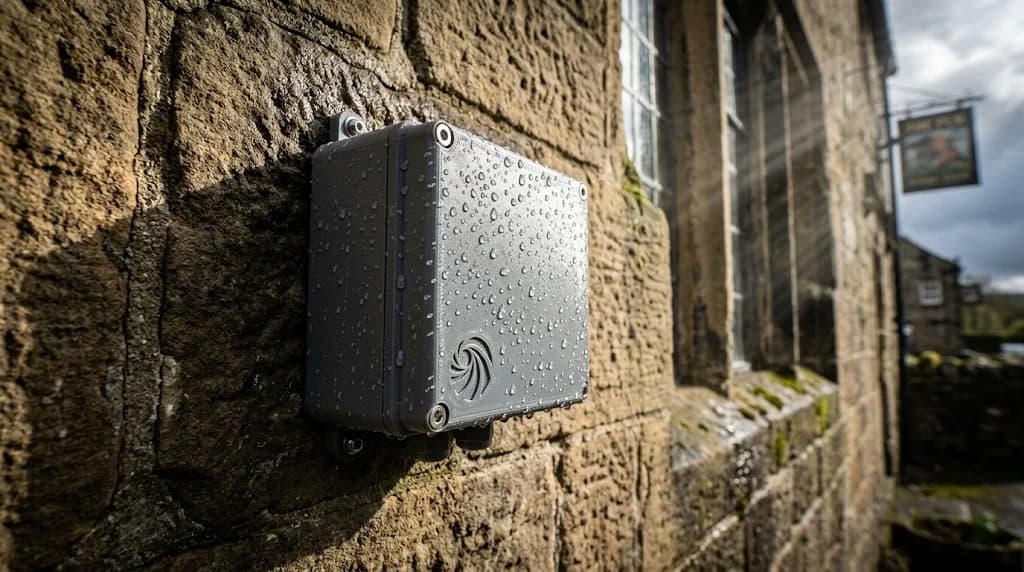
At NovaLab 3D, we print custom enclosures in high-grade ASA to protect electronics from the demanding Yorkshire weather. Submit your CAD design today for a free material recommendation.
Frequently Asked Questions
Keagan Walker
Founder & Lead Designer
NovaLab 3D is a boutique engineering and additive manufacturing studio based in Pickering, North Yorkshire. We provide B2B clients and product developers with direct access to lead engineering consulting, fast 48-hour turnarounds, and custom FDM production runs.