Polycarbonate (PC) for High-Temperature Engineering Applications
Polycarbonate is a heavy-duty thermoplastic with extreme impact resistance and thermal stability up to 110°C, ideal for structural parts, enclosures, and high-stress fixtures.
The Heavyweight of FDM Thermoplastics
When a 3D printed part must withstand extreme temperatures, mechanical stress, or harsh environmental conditions, standard polymers like PLA or PETG quickly fail. For advanced engineering projects, we turn to Polycarbonate (PC).
PC is an amorphous engineering thermoplastic used extensively in safety equipment, bulletproof glass, and industrial machinery. Its high strength and heat resistance make it a prime candidate for metal replacement in prototyping and small-batch production.
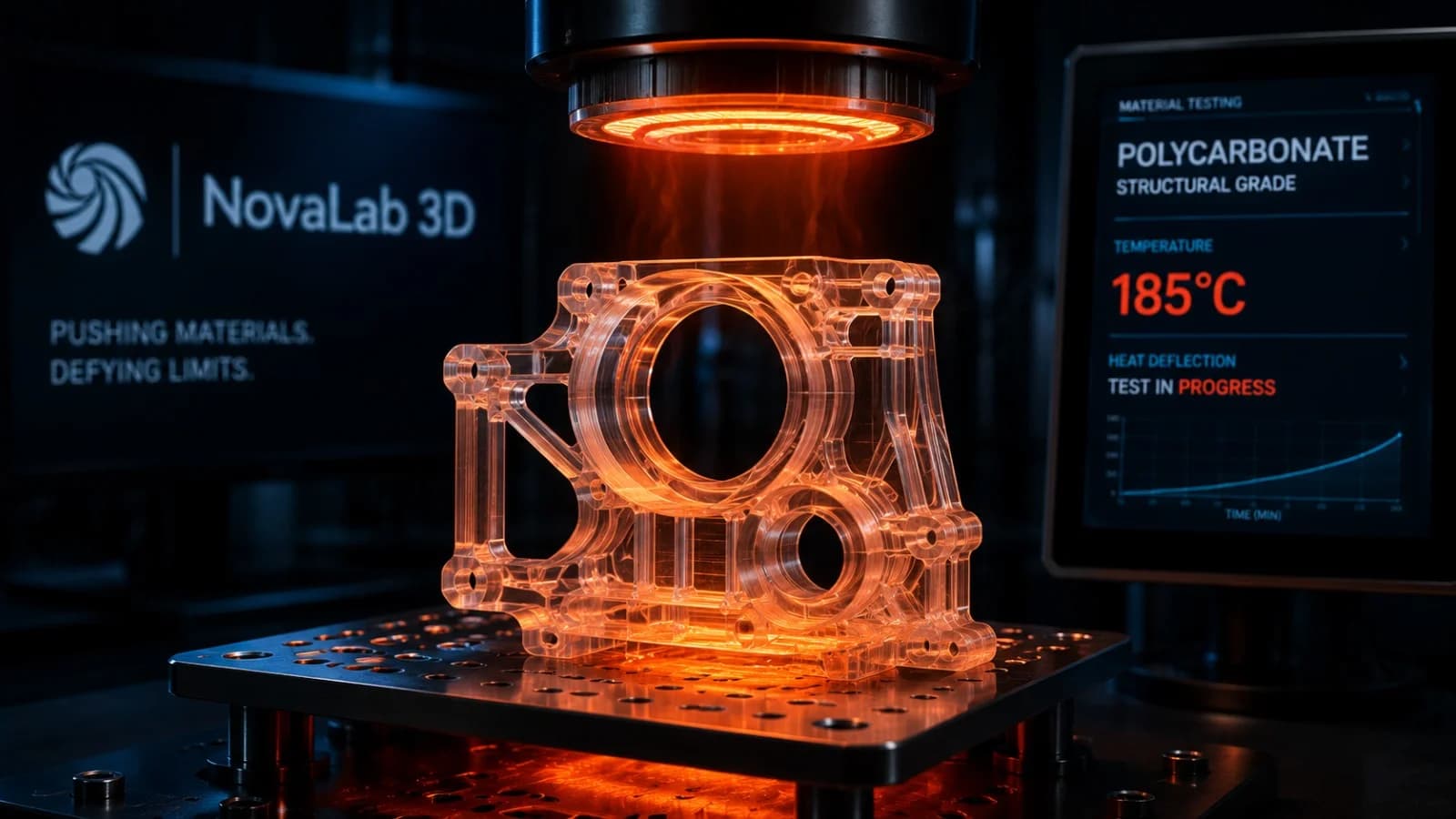
Polycarbonate is the go-to material for parts requiring continuous service temperatures up to 110°C, extreme impact resistance, and high structural rigidity.
Key Properties of Engineering PC
- Exceptional Heat Deflection: Polycarbonate maintains its mechanical structure and dimensional shape at temperatures up to 110°C to 115°C, far exceeding the limits of PETG (75°C) and PLA (50°C).
- Structural Impact Resistance: PC is incredibly tough. It can absorb high impacts and stress loads without cracking, making it suitable for functional enclosures, automotive intake systems, and protective guards.
- Flame Retardancy: Many PC blends possess natural self-extinguishing properties, making them safer for electrical enclosures and aerospace prototyping.
Printing Constraints and Design Rules
While PC offers superb mechanical properties, it is one of the most challenging materials to print. Because it requires extrusion temperatures of 270°C to 310°C and a high chamber temperature, designing parts requires careful consideration:
- Avoid Large Flat Surfaces: PC is highly prone to warping and shrinking as it cools. Design structural ribs rather than thick, solid blocks of plastic to minimize shrinkage force.
- Radii on All Corners: Sharp corners act as stress concentrators where warping or layer separation can start. Add generous fillets to all corners.
- Clamping Screws: PC parts are very rigid. Ensure fastener holes have adequate clearance so that bolts do not stress the plastic around the boss, which could lead to cracking under load.
High-Performance Prints on Demand
NovaLab 3D utilizes enclosed, high-temperature printers capable of processing pure Polycarbonate and PC composites. Contact our Pickering office to review if Polycarbonate is the right fit for your high-temperature application.
Frequently Asked Questions
Keagan Walker
Founder & Lead Designer
NovaLab 3D is a boutique engineering and additive manufacturing studio based in Pickering, North Yorkshire. We provide B2B clients and product developers with direct access to lead engineering consulting, fast 48-hour turnarounds, and custom FDM production runs.