AI & Additive Manufacturing: Reshaping Northern Industry
AI algorithms are transforming additive manufacturing across Northern England by optimizing print parameters in real-time, detecting print failures automatically, and generating load-optimized CAD geometries.
AI & Layered Fabrication
Over the past decade, additive manufacturing (AM) has shifted from a rapid prototyping convenience to an established method for producing end-use, structural components. Yet, despite hardware advancements, the process of translating a digital CAD model into a physical part remains highly dependent on manual expertise. A print failure, an incorrect toolpath speed, or an suboptimal orientation can waste days of machine time and kilograms of high-grade engineering polymers.
Artificial intelligence is acting as the catalyst to solve these issues. By embedding machine learning models directly into the design, slicing, and fabrication stages, we are witnessing the birth of intelligent, self-correcting additive manufacturing workflows.
For the industrial landscape of Northern England, a region built on manufacturing heritage and currently undergoing a high-tech manufacturing resurgence, this integration will have profound positive and negative consequences.
1. How AI is Transforming the 3D Printing Workflow
Artificial intelligence is not just a buzzword; it is a suite of practical tools that address the physics and economics of FDM (Fused Deposition Modelling) and composite printing.
Generative Design and Geometric Optimisation
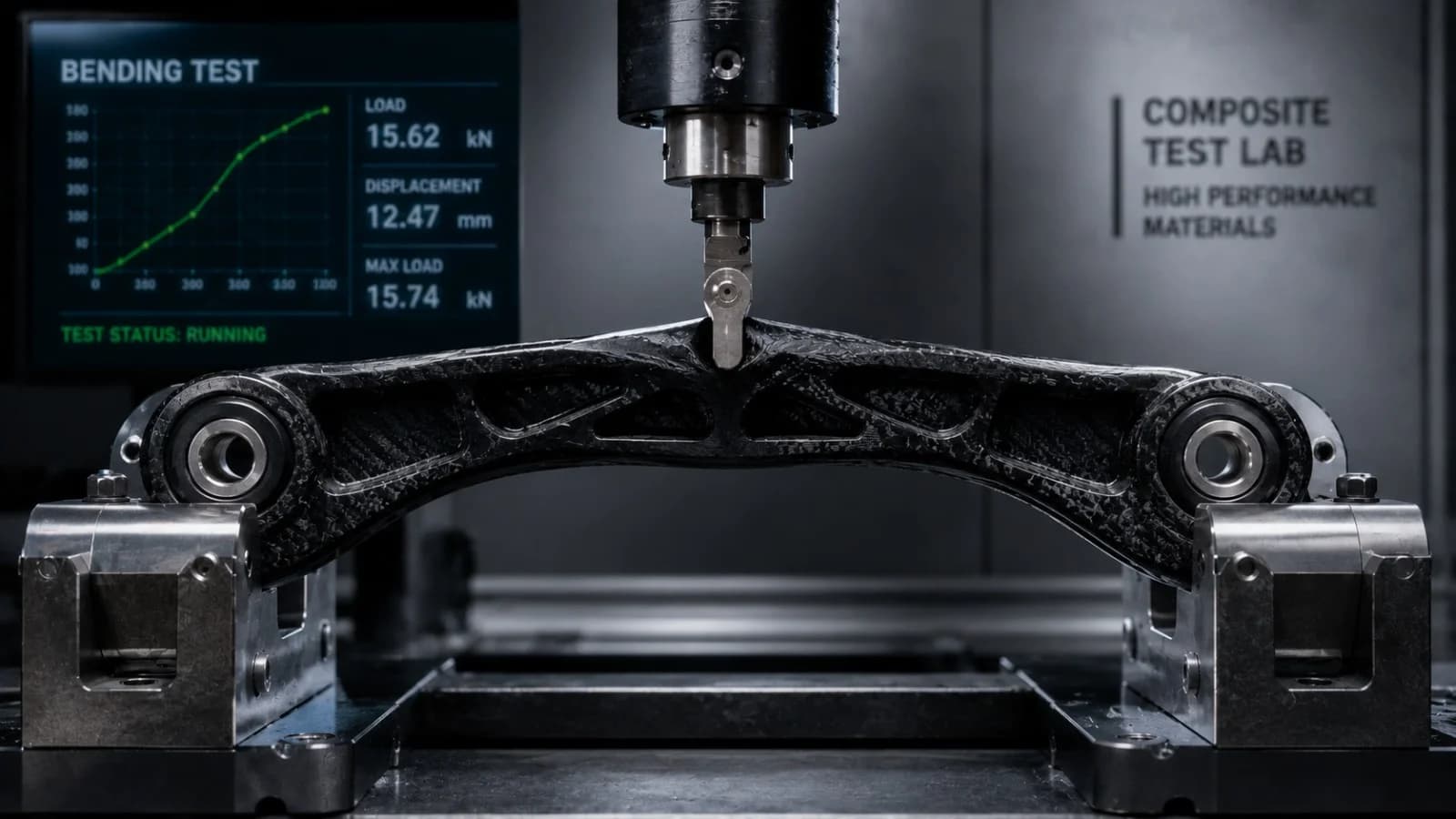
Traditionally, engineers designed parts using simple geometric shapes (cylinders, blocks, webs) that were easy to machine on a lathe or CNC mill. AI-driven generative design models invert this approach. Given a set of boundary conditions (such as mounting points, load limits, and weight targets), neural network design tools can synthesise organic, lightweight structures.
These structures, resembling bones or branches, are impossible to manufacture with traditional subtractive methods, but they are perfectly suited for the layer-by-layer capabilities of additive manufacturing.
Intelligent Slicing and Toolpath Simulation
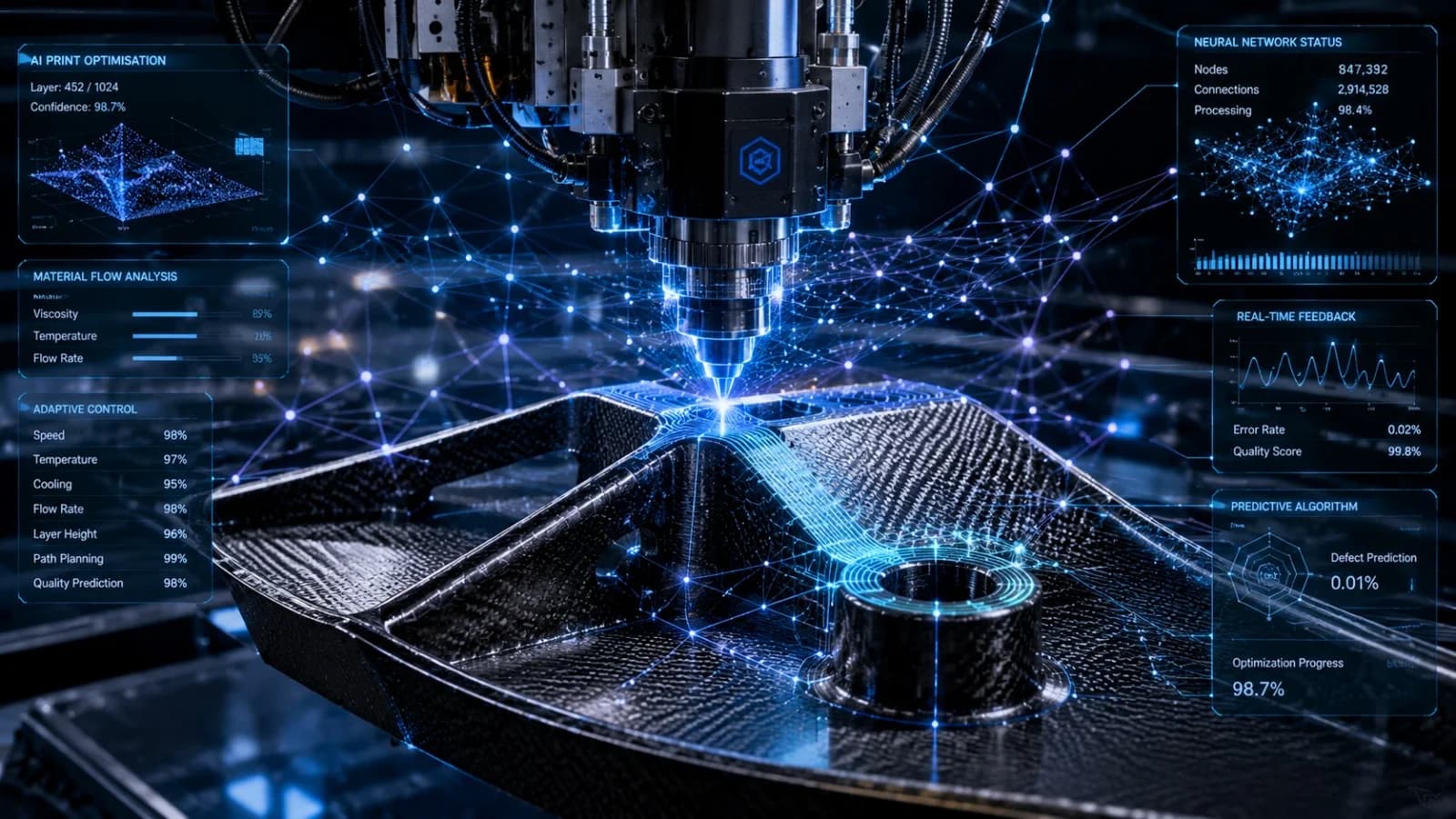
Slicing software is the bridge between a CAD model and the printer's motors. Historically, setting feed rates, travel speeds, and cooling parameters was a trial-and-error process. Modern AI slicers use physics-informed neural networks (PINNs) to simulate how polymers cool and contract in real time.
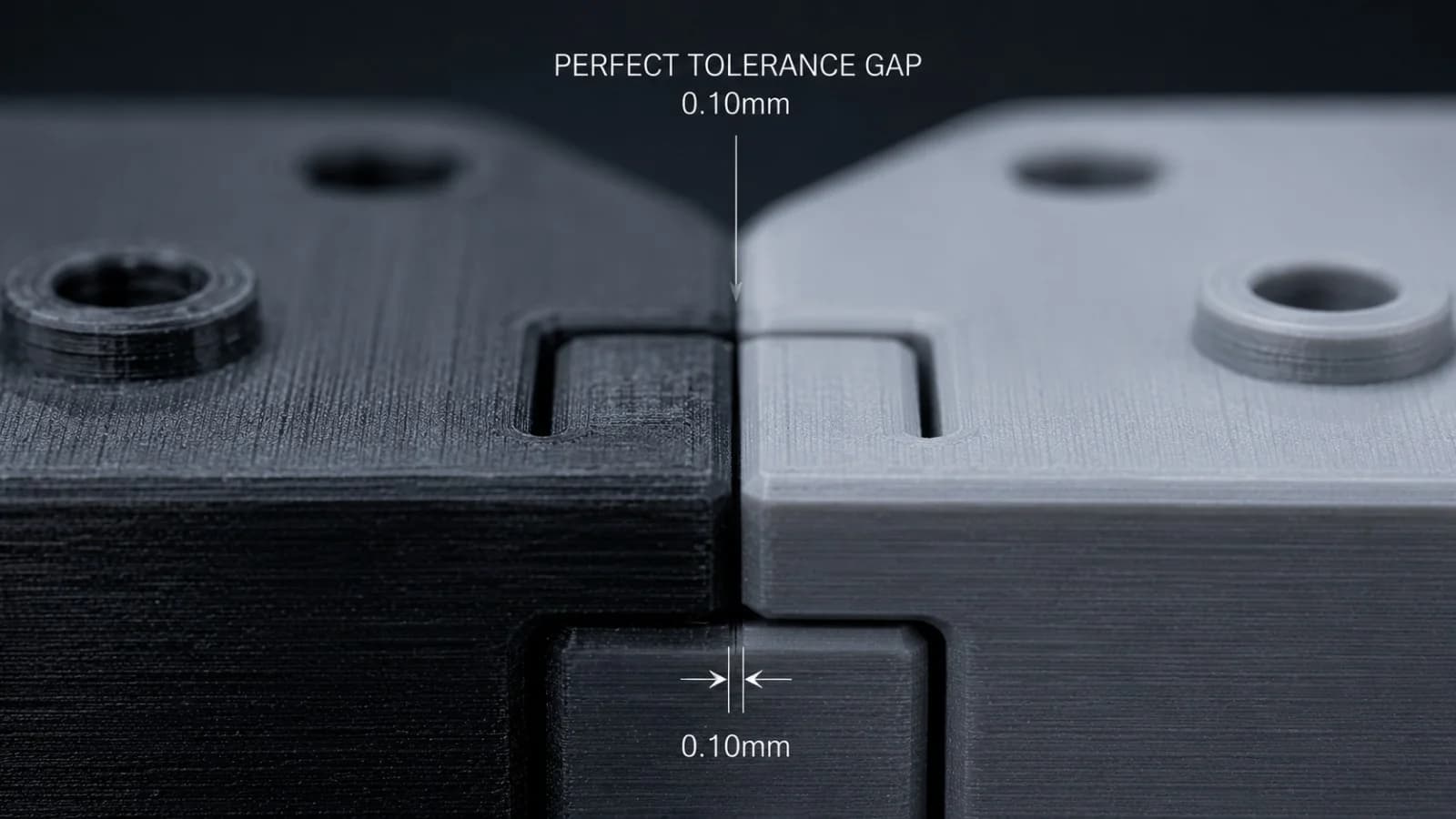
By predicting thermal warping and stress concentration areas before hitting print, the AI automatically modifies the G-code toolpath, altering wall overlap, slowing down on tight corners, or adjusting infill flow rates to guarantee dimensional tolerance.
In-Situ Monitoring and Closed-Loop Control
The most immediate operational bottleneck is print failure. If a nozzle clogs, a part warps off the build plate, or a layer separates mid-print, the machine will blindly continue extruding plastic, creating a birds-nest and wasting raw material.
AI visual inspection systems, powered by high-speed cameras and convolutional neural networks (CNNs), monitor the build envelope frame-by-frame. The system compares the physical print against the digital CAD model slice. If it detects a deviation, such as a lifting corner or a stringing nozzle, it can execute real-time adjustments (e.g. increasing chamber temperature or adjusting extrusion flow) or immediately halt the print to notify the operator, saving valuable material like PA6-GF Glass Fibre or Carbon Fibre composites.
2. The Positive Impacts on the North of England
As the industrial sectors of Yorkshire, Greater Manchester, and Lancashire integrate these AI-driven manufacturing tools, several regional benefits will emerge:
Bridging the Technical Skills Gap
One of the primary barriers for small-to-medium enterprises (SMEs) in Yorkshire and the North West adopting additive manufacturing is the lack of specialized CAD and materials engineers. Generative design and intelligent slicing tools act as force multipliers.
A designer in a Pickering agricultural engineering shop can input mechanical requirements and let the AI propose print-ready geometries, bypassing the need for decades of specialised experience. This lowers the entry barrier for advanced manufacturing.
Hyper-Localising Supply Chains
The global supply chain crises of recent years highlighted the fragility of relying on far-flung manufacturing networks. AI combined with additive manufacturing allows Northern firms to establish hyper-local, distributed networks.
Instead of warehousing thousands of physical spare parts, businesses can maintain digital libraries of CAD files. An AI-managed logistics platform can automatically route a spare part request to the nearest regional 3D printing facility (such as NovaLab 3D in Pickering) to be printed and delivered within 24 hours, boosting regional resilience.
3. The Negative Impacts and Challenges
While the benefits are clear, the rapid roll-out of AI-augmented manufacturing poses structural risks for the Northern workforce and economy:
Job Displacement in Traditional Sectors
The automation of the design-to-slice pipeline reduces the hours required to prepare products for manufacturing. This will inevitably pressure traditional drafting roles and entry-level CAD technician jobs.
Additionally, as automated monitoring reduces the need for operators to watch over machines, large printing hubs will require fewer technicians per build-chamber, driving consolidation and potential labour contraction in low-skill sectors.
The Regional Digital Divide
The benefits of AI-driven manufacturing require significant digital infrastructure, high-speed networks, and computational power. There is a risk that larger urban centres with deep tech ecosystems (such as Leeds and Manchester) will capture the vast majority of AI investments and expertise.
Smaller, rural manufacturing businesses in areas like Ryedale or North Yorkshire could face a digital divide, finding themselves unable to compete with the automated efficiency of urban counterparts due to access and upskilling constraints.
Conclusion: Balancing Innovation and Adaptation
The convergence of artificial intelligence and additive manufacturing represents a technological shift that Northern industry cannot afford to ignore. The positive impacts, including design freedom, material efficiency, and localised resilience, offer a path to revitalise the North’s manufacturing legacy. However, navigating the negative impacts requires proactive upskilling of the regional workforce and targeted support for rural engineering firms.
At NovaLab 3D, we are actively embracing this transition. By utilising hybrid human-AI workflows, we ensure that every design is optimised for physical performance while preserving the rigorous human oversight needed for critical industrial components.
Frequently Asked Questions
Keagan Walker
Founder & Lead Designer
NovaLab 3D is a boutique engineering and additive manufacturing studio based in Pickering, North Yorkshire. We provide B2B clients and product developers with direct access to lead engineering consulting, fast 48-hour turnarounds, and custom FDM production runs.